Studio vs Natural Light Headshots for Actors
What Casting Directors Actually Respond To
It's a debate that comes up regularly in acting classes and online forums, and it's worth settling clearly because the answer has real implications for your career.
"Should I get my headshots taken outdoors with natural light or in a studio?"
Both approaches can produce beautiful images. But for actors submitting to casting directors in a competitive market like Dallas-Fort Worth, they do fundamentally different things, and understanding the difference will help you make a smarter investment in your headshots.
What the Goal of an Actor Headshot Actually Is
Before getting into lighting, it helps to be clear about what an actor’s headshot is trying to accomplish.
The goal isn't to look interesting. It isn't to create a visually striking image that showcases a photographer's creative vision. It isn't to produce something that looks great on Instagram.
The goal is clarity. A casting director should be able to look at your headshot and immediately understand your type, read your personality, and picture you in a role. The faster and more clearly that happens, the harder your headshot is working for you.
Every technical decision in a headshot session, including the choice between studio and natural light, should be evaluated against that single standard.
What Studio Lighting Does Best
Studio lighting is controlled lighting. That means a photographer can place light sources precisely, adjust their intensity and direction, and create a setup that flatters your specific face, your skin tone, your bone structure, the color of your hair and eyes, consistently from the first frame to the last.
The result is an image where the light is doing exactly what it's supposed to do: illuminating your face evenly, reducing distracting shadows, and creating a clean, professional look that puts all of the visual emphasis on your expression.
That consistency is valuable beyond just the technical quality of a single image. When every frame in a studio session is lit the same way, a casting director can compare expressions across dozens of shots without the lighting variable changing what they're seeing. The focus stays entirely on you, your energy, your personality, your presence, rather than on how the light happened to fall in a particular moment.
For actors, that's exactly the environment you want.
The Variables That Natural Light Introduces
Natural light has genuine appeal. Outdoor headshots can feel relaxed, organic, and visually interesting in ways that a clean studio setup sometimes doesn't.
But natural light is also fundamentally uncontrolled, and for actor headshots specifically, that lack of control introduces problems that are worth understanding before you commit to an outdoor session.
Sunlight changes constantly. The quality of light shifts as clouds move, as the sun moves across the sky, and as the session progresses from morning into afternoon. What looked beautiful in the first 20 minutes of a session can look completely different an hour later, and those inconsistencies show up in your images.
Outdoor environments also introduce backgrounds that compete with your face for attention. Trees, buildings, people passing by, parked cars, architectural details, all of these create visual noise that pulls focus away from you. Even a beautifully blurred background can feel stylized in a way that distracts from the primary purpose of the image.
Shadows are another challenge. Outdoor lighting creates shadows that shift constantly and can be unflattering in ways that are difficult to predict or control in the moment. A shadow that falls across one side of your face in a specific way might look dramatic and interesting, but it also makes it harder for a casting director to read your expression clearly.
When Natural Light Actually Works
This isn't an argument that natural light is never appropriate for actors. There are specific contexts where it makes sense.
Commercial and lifestyle headshots, the kind used for brand work, social media, or certain types of advertising, often benefit from the relaxed, approachable quality that outdoor light creates. If you're building a personal brand or need images for social media content alongside your traditional actor headshots, outdoor shots can be a valuable addition to your portfolio.
The distinction worth making is between core actor headshots, the primary images you submit for film, television, commercial, and theater auditions, and supplementary images that serve other purposes. For the core submissions that casting directors see first, clarity and consistency win every time. For everything else, there's more room for creative flexibility.
Why Consistency Matters in a Competitive Market
Dallas-Fort Worth is a growing film and television market. More productions are coming to the area, more casting is happening locally, and more actors are competing for the same roles. In that environment, the quality and clarity of your headshots have a direct impact on how often you get seen and how seriously you're considered.
Casting directors reviewing large submission pools respond to images that are immediately clear and easy to read. Studio-lit headshots remove the variables that can make an image harder to read, such as inconsistent shadows, competing backgrounds, and changing light, and let your expression and personality do the work.
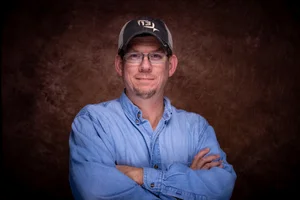
At TRG Headshots in Red Oak, every session uses professional studio lighting specifically calibrated for headshot photography. Travis Massingill has refined a lighting setup that works consistently across a wide range of skin tones, hair colors, and facial structures, producing clean, flattering, casting-ready images for actors at every level.
We serve actors from across the DFW area, including Dallas, Fort Worth, Waxahachie, Midlothian, Cedar Hill, Mansfield, and all of Southern DFW.
Clear Always Beats Interesting
For actor headshots, the most important thing is that your image is easy to read. Studio lighting gives you that clarity reliably and consistently. Natural light can be beautiful, but it introduces variables that work against the primary goal.
When casting directors can look at your headshot and immediately understand who you are and where you fit, your image is doing exactly what it's supposed to do.
Learn more about actor headshots in Dallas →