
Why Growing Companies Are Moving to On-Location Headshots Instead of Sending Employees to Studios
If you’re a growing company, you know this feeling: one day you look at your website and think, “These photos don’t match anymore.”
One person has a clean professional headshot. Another has a cropped wedding photo. Someone else has a dim selfie in a car. And one team member still has a photo from five jobs ago.
It’s not that your employees don’t care. It’s that the old way of doing headshots doesn’t scale.
When a company is small, it’s easy to say, “Everyone go get a headshot sometime.” But once you have 10, 20, 50, or 100 employees, “sometime” turns into “never,” and your brand starts to look messy online.
The problem isn’t the photo. It’s the system.
Most companies handle headshots in one of these ways:
• They ask employees to take care of it themselves.
• They try to reimburse employees for studio sessions.
• They wait until the next big website update and then rush it.
Each option sounds reasonable, but each one creates the same outcome: inconsistent photos and constant delays.
Here’s what typically happens when employees are sent to studios one at a time:
1) Scheduling becomes a headache.
Some employees book quickly. Some forget. Some “mean to do it next week.” HR or marketing ends up chasing people, and the project drags out for months.
2) Employees choose different studios and styles.
One studio uses a bright white background. Another uses outdoors. Another uses heavy retouching. Another uses harsh lighting. Now your team page looks like a collage.
3) Productivity drops.
A studio session means travel time, parking, and downtime. Even if the photo session is quick, the employee might lose half a day.
4) It never stays current.
New hires join. Roles change. Promotions happen. Teams grow. The headshot situation becomes an ongoing problem.
What’s changing: companies want “one-and-done” consistency.
More companies are moving to on-location headshots because it creates a simple system:
You pick a day.
The photographer comes to you.
Your whole team gets a consistent look.
You’re done.

And the bigger your company gets, the more valuable that becomes.
A quick story (common real-world example)
Imagine a local office with 18 employees. The owner wants to update the website. He tells everyone to get a headshot “in the next month.”
Four people do it. Six forget. Two ask for recommendations. Three are traveling. One person leaves the company. Two new people get hired.
Three months later, the “project” is still not finished.
That’s the moment many companies realize: “We need a better way.”
On-location headshots solve that in a single morning or afternoon.
Why on-location headshots work better
1) Everyone gets the same look.
Same lighting. Same background. Same crop. Same editing style. Your brand becomes instantly consistent.
2) It’s fast for employees.
Most employees step away for just a few minutes. They return to work right away. No travel. No back-and-forth.
3) HR and marketing stop chasing people.
You’re not managing 20 different schedules. You’re managing one day.
4) It fits onboarding.
Many companies schedule a “headshot day” once or twice per year, then add new hires in the next session. That keeps everything current without stress.
Why this matters more than ever
People research companies before they call.
They look at:
• your website “About” page
• team bios
• LinkedIn profiles
• Google results
• reviews and social posts
In many cases, your headshots are the first time a buyer “meets” your company.
Professional headshots don’t just look nice. They communicate:
• stability
• professionalism
• organization
• trust
• pride in your team
Those are business signals.
“But we want it to feel natural, not stiff.”
That’s a common concern. The best corporate headshots do not look forced. They look confident and real.
A good headshot session includes coaching, not just clicking a button:
• where to stand
• how to angle shoulders
• how to relax the face
• how to find a genuine expression
• how to avoid stiff posture
Most people don’t need to “pose.” They need direction that makes them look like themselves on their best day.
What a typical on-location session looks like
Here’s the simple version:
Step 1: Choose a space.
A conference room is perfect. A corner office works. Sometimes a lobby area works. The goal is a clean area for a consistent setup.
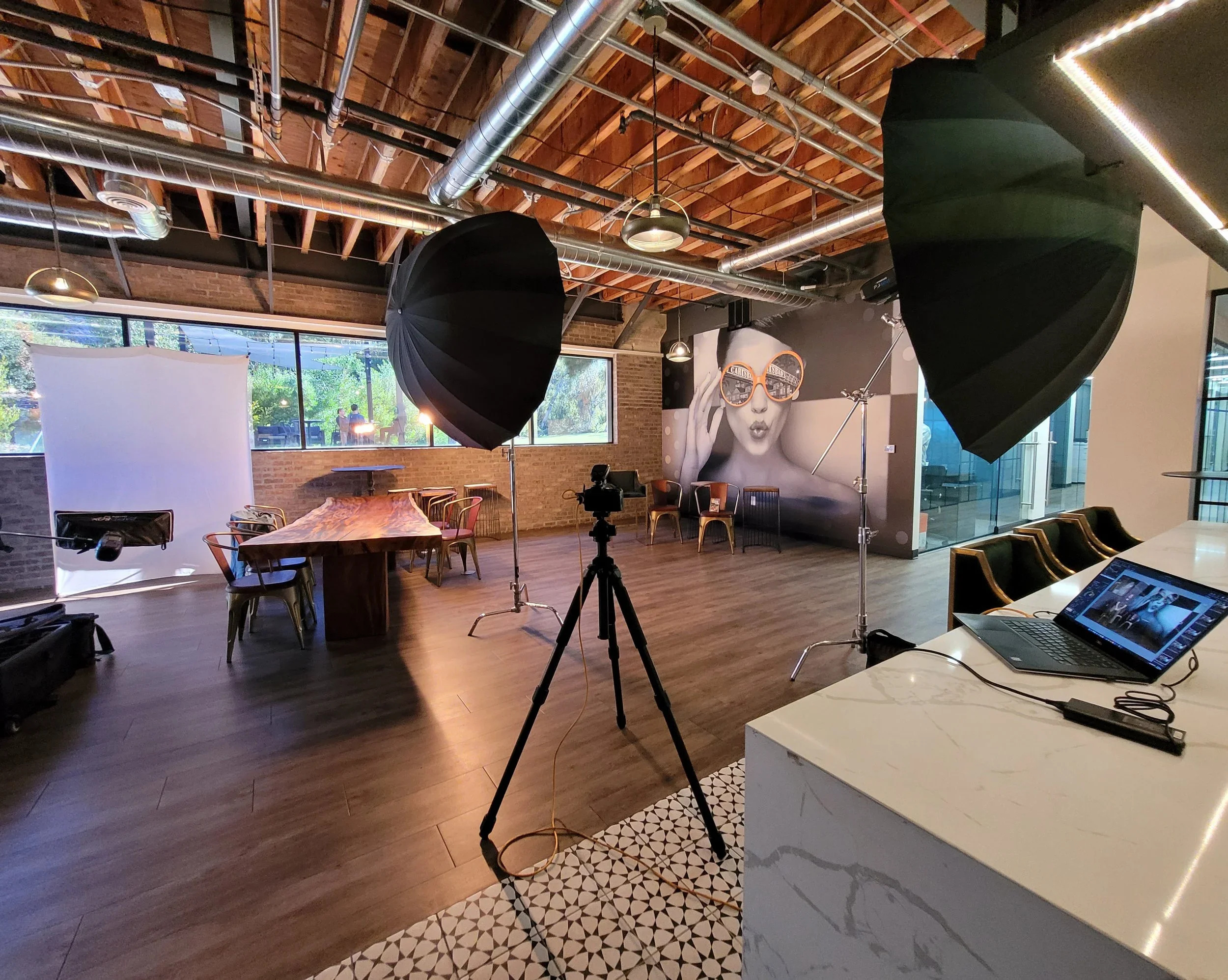
Step 2: Portable studio setup.
The photographer brings professional lighting and creates a repeatable look. This is how you get “studio quality” in your office.
Step 3: Quick employee sessions.
Employees come in one at a time. They get coached. They see the result. They’re done.
Step 4: Professional delivery.
Images are delivered ready for your website, LinkedIn, email signatures, and internal systems.
The biggest benefit: brand control
When your whole team is photographed in one consistent style, you stop having “random photo problems” all year.
You gain a set of images you can use across:
• website team pages
• proposals
• pitch decks
• press releases
• social posts
• recruiting pages
• employee spotlights
For a growing company, that’s not a small upgrade. It’s brand infrastructure.
Bottom line
If your company has outgrown “everyone handle your own headshot,” on-location headshots are the clean fix.
It’s faster. It’s consistent. It’s professional. And it makes your company look as organized as it actually is.